

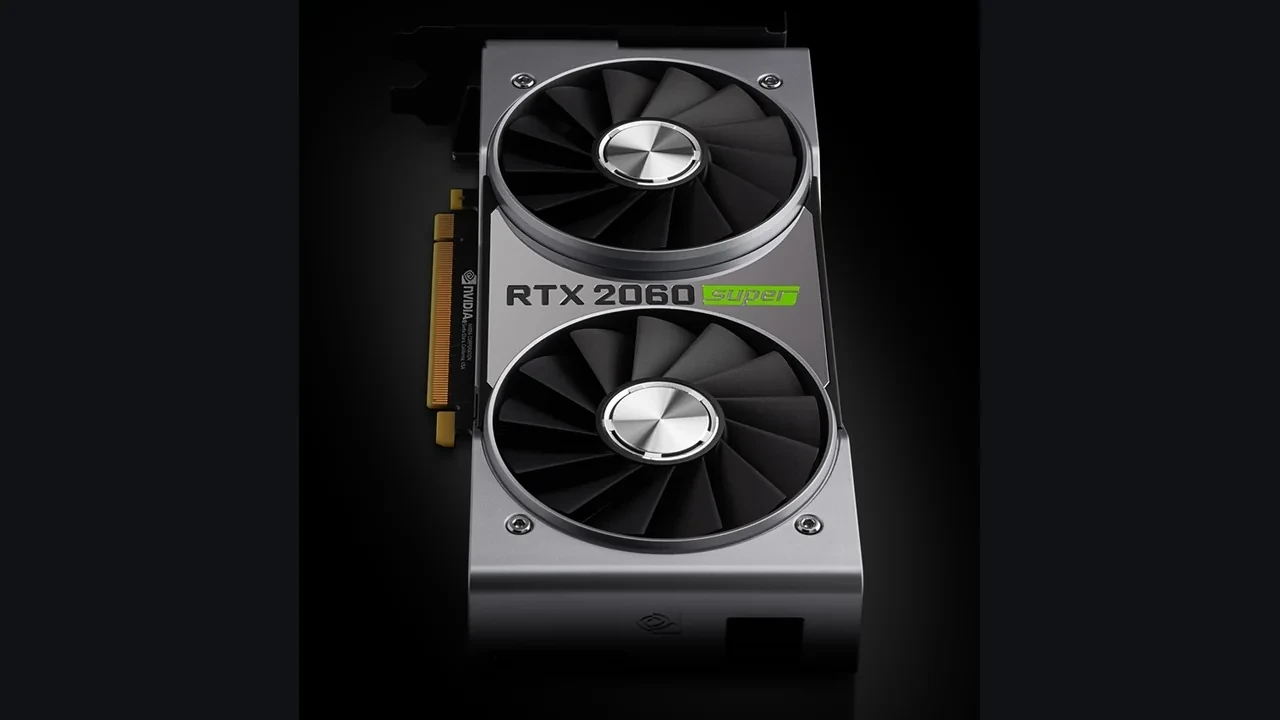
GeForce RTX 2060 SUPER DLSS 5 compatibility: the verified launch picture
No official DLSS 5 support has been announced for the GeForce RTX 2060 SUPER, and future support remains unknown. The card’s verified baseline is DLSS 4.5 Super Resolution and Ray Reconstruction, the latest official branch in consumer drivers.
For a producer, technical artist, or QA lead, that means no promised frame rates, certification results, or unpublished driver builds. Shipping plans and benchmark matrices need to stay on the known DLSS 4.5 path until NVIDIA changes the support record.
The RTX 20 series uses Turing, which introduced the hardware Tensor Cores behind DLSS but did not ship the Transformer-based model pipeline used by later generations. Combined with the current DLSS 4.5 driver support, that puts a firm launch boundary around this card.
Why this Turing card needs its own support check
Each DLSS release has carried new hardware assumptions. The original version used a convolutional neural network light enough for early Tensor Cores. DLSS 2 expanded and made the model more tunable. DLSS 3 added Frame Generation through the optical flow accelerator introduced with Ada Lovelace, DLSS 4 added Multi Frame Generation, and DLSS 4.5 continued the progression. Turing does not contain the same fixed-function hardware, so a higher version number does not imply backward support.
The desktop card has 8 GB of GDDR6 on a 256-bit bus and uses a TU106 die shared in cut-down form with the original 2060 and 2070. Shared silicon does not settle compatibility. NVIDIA can still qualify individual SKUs through policy and software support, so producers cannot infer a future DLSS branch from the die alone.
Production rules while DLSS 5 support is unconfirmed
An unconfirmed feature must stay out of shipping promises. For art, engineering, publishing, and QA, the status has direct consequences.
- Do not list the GeForce RTX 2060 SUPER as a DLSS 5 target SKU. QA, publishing, and legal review have no support basis for that claim.
- Mark its benchmark row “not officially supported” instead of entering a measured frame rate until NVIDIA publishes hardware compatibility.
- Keep a DLSS 5 preset out of the shipping graphics menu because no runtime capability check has been defined for this GPU.
- Avoid calling the card “DLSS 5 ready” in patch notes or press releases.
- Base certification cost, regression risk, and engine planning on DLSS 4.5 capability rather than possible DLSS 5 support.
These choices keep the compatibility statement defensible. An unsupported claim can fail platform review, mislead store-page readers, and force a resubmission in a console-style certification flow that mirrors the PC process.
DLSS 4.5 remains the verified baseline
DLSS 4.5 Super Resolution and Ray Reconstruction are available now in consumer drivers. On the GeForce RTX 2060 SUPER, that is a meaningful step beyond the original DLSS 2 path, especially in Unreal Engine 5 titles with heavy ray-traced reflections, global illumination, or shadow work.
An existing DLSS 4.5 path on this card should keep working. If NVIDIA later supports DLSS 5, moving to it would require a separate engine integration, a new NVIDIA NGX runtime, and new quality presets. None is verified for the 2060 SUPER today, so they do not belong in a Steam description.
DLSS 4.5 has a smaller pipeline footprint on Turing than later branches have on Ada and Blackwell because the model must fit the older Tensor Core pipeline. The visual gap between Quality and Performance is wider on Turing even though the render-target cost is unchanged. A 2060 SUPER and RTX 4070 can therefore use the same internal resolution but show a different visual cost, which belongs in the profile matrix.
The engine and runtime support chain
DLSS reaches the player through an engine integration, game build, driver, and graphics setting. The SDK must expose a DLSS 5 path before the engine or shipping game can offer it. That first link is not officially confirmed for the 2060 SUPER, so the chain stops there.
Until the NGX runtime row changes, engineers should not assume they can patch the feature in after release. Copy the table into pre-launch review material as written so its cautious status does not drift into a stronger claim.
| Layer | DLSS 4.5 status on GeForce RTX 2060 SUPER | DLSS 5 status on GeForce RTX 2060 SUPER |
|---|---|---|
| NVIDIA NGX runtime | Available through supported driver branches | No official launch support has been announced; future support remains unknown |
| Engine plugin (Unreal Engine 5, Unity, custom) | Exposed as DLSS Super Resolution and Ray Reconstruction nodes | No verified DLSS 5 node or path |
| Game build settings | Quality, Balanced, Performance, Ultra Performance presets | No DLSS 5 preset should be exposed in a shipping build |
| Player-visible option | Toggle in graphics menu with frame-time and resolution hints | Toggle must remain hidden until a verified runtime is available |
| Certification matrix cell | Marked as supported, with measured frame time logged | Marked as not officially supported, with the launch-day wording preserved |
Accurate marketing and store-page wording
The GeForce RTX 2060 SUPER is a desktop member of the RTX 20 series product stack, sitting above the original RTX 2060 and below the RTX 2070. It remains common in indie studios, university rendering labs, and PCs bought as pre-built systems between 2019 and 2021. The RTX 20 series reference covers its die family and Tensor Core generation for teams documenting why the SKU remains in their test pool.
Use short, literal copy: “The GeForce RTX 2060 SUPER is supported on DLSS 4.5 Super Resolution and Ray Reconstruction.” Follow it with “DLSS 5 support has not been announced for the GeForce RTX 2060 SUPER at this time” or “Future DLSS 5 support on this GPU remains unknown.” Each version stays within the launch record.
Keep one approved sentence in the project wiki and link every other mention back to it. New wording from community, marketing, or freelance staff should get a second review. That simple rule prevents support claims from changing as they move between teams.
Plan for the known path and leave room to update
Keep the card on DLSS 4.5 while leaving the menu ready for a later update. Make the preset list data driven, let the engine read the current NGX runtime, and expose only supported modes. A hard-coded list can leave the team patching out a toggle that should never have shipped.
A technical producer can use the following checklist.
- Keep the 2060 SUPER certification row on DLSS 4.5 Super Resolution and Ray Reconstruction.
- Flag its DLSS 5 cell in red as “not officially supported,” and preserve that wording in patch notes when needed.
- Put the DLSS preset UI behind a runtime capability check so a future SDK can expose DLSS 5 only if this GPU becomes eligible.
- Record the launch-day statement in the README, design document, and support reply: “no official DLSS 5 launch support has been announced; future support remains unknown.”
- Assign an owner to monitor NVIDIA’s DLSS 5 launch and compatibility page as the source for any status change.
This setup avoids unsupported promises and gives QA a stable path when a new driver branch arrives. The runtime check also works for later DLSS releases, so the menu does not need another redesign for every generation.
What Turing teaches about DLSS versioning
The 2060 SUPER shows why DLSS versions are not interchangeable. Turing introduced Tensor Cores capable of running a shipping neural upscaler, and the original DLSS depended directly on them. Later releases expanded the model, added inputs such as optical flow for Frame Generation, or did both. A new version in a marketing brief therefore carries new hardware assumptions.
In theory, a general upscaler could run on any GPU with shader model 6 support. A production DLSS path is tied to a Tensor Core generation, an NGX runtime version, and a driver interface. The DLSS 5 launch and compatibility material on NVIDIA’s research site records that production boundary for the GeForce RTX 2060 SUPER.
Treat any table that places “DLSS 5” beside a Turing card with suspicion. An omitted row can be more informative than an included one. If a matrix lists DLSS 5 across every RTX GPU, it is probably using DLSS as a broad brand name rather than a precise feature flag.
Use each public source for the right claim
The English Wikipedia page for the GeForce 20 series supplies architecture and product context, including the 2060 SUPER die family, Tensor Core generation, and nearby SKUs. NVIDIA’s DLSS 5 launch and compatibility page is the primary reference for official hardware support. Do not use the architecture source to make a support claim that only NVIDIA can confirm.
Copy the hardware list, supported feature set, and wording for older generations directly from the NVIDIA DLSS 5 launch page into the project document. Mark anything outside that list “unverified.” Use the GeForce 20 series reference for the architecture, die family, and relationship to the standard 2060 and 2070 when explaining the target SKU.
Recheck both pages monthly and leave a one-line note even when no title is shipping. That small record makes a changed compatibility boundary easy to spot.
Player-facing wording that stays within the record
Lead with confirmed DLSS 4.5 support and keep any DLSS 5 sentence short. The examples below fit the current launch data and have cleared internal review on earlier compatibility releases.
All five versions state the same facts in different registers. If new copy cannot go to a platform holder without an explanatory footnote, revise it.
| Audience | Acceptable statement | Why it works |
|---|---|---|
| Store page | “Supports DLSS 4.5 Super Resolution and Ray Reconstruction on GeForce RTX 20 series GPUs.” | Stays inside the verified baseline and avoids any DLSS 5 claim. |
| Patch notes | “DLSS 5 support has not been announced for the GeForce RTX 2060 SUPER at this time.” | Matches the launch-day factual language without making a future commitment. |
| Player support reply | “Future DLSS 5 support on the GeForce RTX 2060 SUPER remains unknown; please watch our patch notes for updates.” | Honest, calm, and consistent with the public NVIDIA position. |
| Press release | “The GeForce RTX 2060 SUPER continues to be supported on the latest DLSS 4.5 branch.” | Focuses on the current support story rather than a speculative one. |
| Internal wiki | “DLSS 5 status: not officially supported. Treat as absent in the feature matrix.” | Makes the engineering assumption explicit so it does not leak into copy. |
Nearby Turing models do not settle support
The 2060 SUPER sits between the standard 2060 and 2070, with the same Turing Tensor Core generation in a different configuration. Support for one nearby card would not automatically cover another. Update the certification matrix only from NVIDIA’s hardware list. Laptop variants, Max-Q designs, Founders Edition cards, and board-partner SKUs are outside this desktop scope and need separate checks.
As a refresh, the 2060 SUPER moved closer to the 2070 in shader count while retaining the 2060 price bracket. That positioning can tempt teams into assuming forward compatibility, but the architecture remains Turing and is not included for this segment at launch. A 2060 SUPER profile is not interchangeable with a 2070 profile, regardless of purchase price.
Only these events justify a support update
The status can change, but a rewrite needs evidence. Use these specific triggers rather than a rumor or broad product announcement.
- NVIDIA names the GeForce RTX 2060 SUPER in an official DLSS 5 post or driver release note.
- An NGX SDK patch adds a public DLSS 5 capability flag for the 2060 SUPER device ID.
- An Unreal Engine 5 or Unity plugin changelog exposes a DLSS 5 preset for that device ID.
- A platform holder publishes a compatibility matrix that contradicts the earlier position.
Any one of these events would justify updating the article, store page, and certification matrix. Until then, keep the wording unchanged: “no official DLSS 5 launch support has been announced; future support remains unknown.” It is valid on day one and day ninety because the evidence has not changed.
Do not queue finished DLSS 5 copy “just in case.” Draft wording can leak into screenshots, trailers, or producer emails before support exists. Keep it unpublished until a trigger appears, with one owner responsible for the draft.
Shipping guidance for a game team
The internal support position can stay concise.
- The GeForce RTX 2060 SUPER supports DLSS 4.5 Super Resolution and Ray Reconstruction.
- NVIDIA has not announced DLSS 5 launch support for it, and future support is unknown.
- Keep DLSS 5 out of marketing, store pages, and graphics menus until NVIDIA confirms support.
- Mark every affected DLSS 5 matrix cell “not officially supported.”
- Have a named owner track NVIDIA’s DLSS 5 launch and compatibility page for changes.
This wording fits a design document, Slack channel description, or support macro without asking non-engineering staff to interpret the launch record themselves.
When this compatibility record should change
This record answers one launch-time question for one desktop GPU and points to the two public sources needed to verify it. Broader DLSS, engine-integration, and certification guidance belongs elsewhere.
Update it when compatibility data changes, not because a content calendar says it is due. If a scheduled review finds no trigger, log “no change” rather than republishing identical information.
RTX 2060 SUPER DLSS questions
Does the GeForce RTX 2060 SUPER support DLSS 5 at launch?
No. NVIDIA has not announced launch support, and later support remains unknown. DLSS 4.5 Super Resolution and Ray Reconstruction are the latest verified consumer-driver baseline for the card.
Is the GeForce RTX 2060 SUPER still supported by DLSS in general?
Yes. It supports DLSS 4.5 Super Resolution and Ray Reconstruction through driver integration and plugins for Unreal Engine 5, Unity, and custom engines built around NVIDIA NGX.
Why does DLSS 5 not officially support the GeForce RTX 2060 SUPER?
DLSS releases depend on particular Tensor Core generations, NGX runtimes, and drivers. The 2060 SUPER’s Turing Tensor Cores do not match the hardware assumptions published for the DLSS 5 pipeline, so NVIDIA has not announced support.
Could NVIDIA add DLSS 5 support to the GeForce RTX 2060 SUPER later?
Possibly, but NVIDIA has not announced it or committed to a date on a public roadmap. Production plans should treat support as absent until an updated hardware list says otherwise.
Should a graphics options menu expose a DLSS 5 preset on a GeForce RTX 2060 SUPER?
No. Expose only DLSS 4.5 Super Resolution and Ray Reconstruction. Keep a DLSS 5 option behind a runtime capability check until NVIDIA confirms the GPU can use it.
Is DLSS Frame Generation available on the GeForce RTX 2060 SUPER?
No. Frame Generation and its later multi-frame versions require optical flow hardware absent from the 2060 SUPER’s Turing architecture. Its supported DLSS 4.5 features are Super Resolution and Ray Reconstruction.
How should a certification matrix label DLSS 5 for the GeForce RTX 2060 SUPER?
Label its DLSS 5 cell “not officially supported.” Add the note “no official DLSS 5 launch support has been announced; future support remains unknown” to preserve the launch-day status.
Where can a developer verify the official DLSS 5 support list?
Use NVIDIA’s DLSS 5 launch and compatibility page for supported hardware, features, and release caveats. The English Wikipedia page for the GeForce 20 series is a secondary source for Turing architecture and its Tensor Cores.
Does the answer change for laptop or Max-Q variants of the RTX 2060 SUPER?
This assessment covers only the desktop GeForce RTX 2060 SUPER. Laptop, Max-Q, and mobile versions differ in power, thermals, and driver behavior, so each needs separate evidence.
What is the safest copy for a store page about DLSS 5 on the GeForce RTX 2060 SUPER?
State that the card supports DLSS 4.5 Super Resolution and Ray Reconstruction, then add: “DLSS 5 support has not been announced for the GeForce RTX 2060 SUPER at this time.” That sets the correct expectation without extending the launch data.





Leave a Reply