

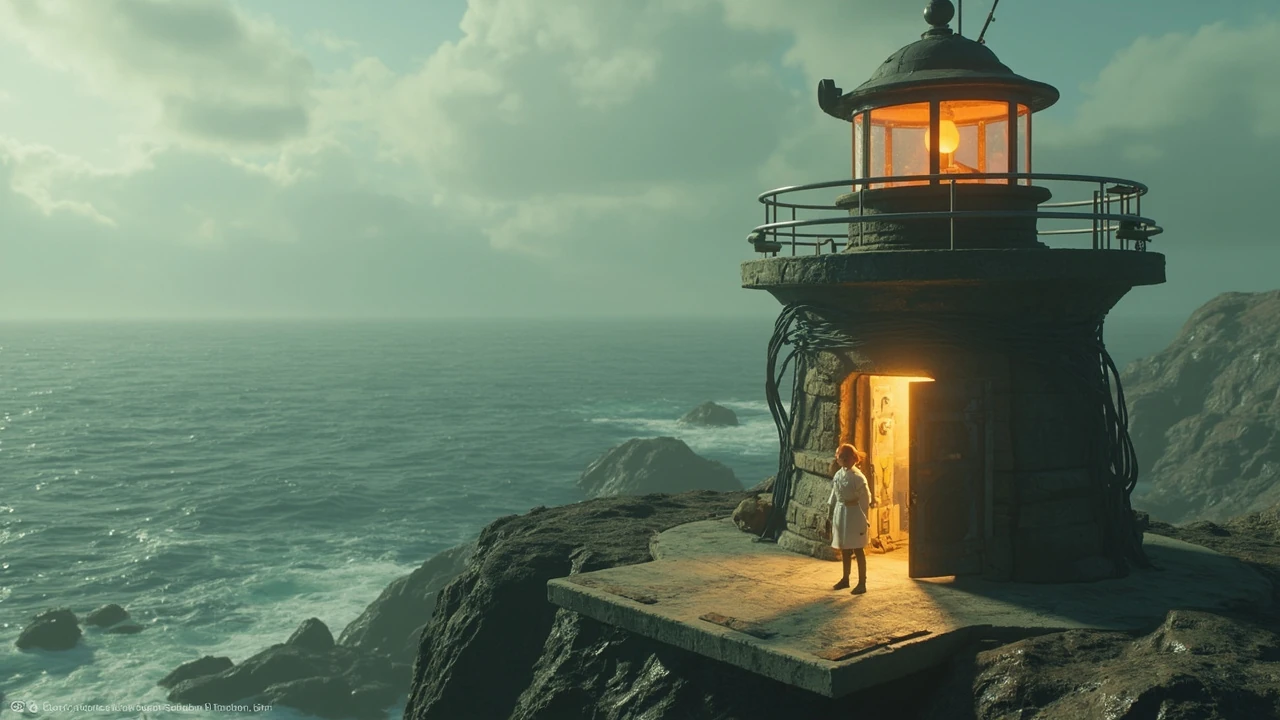
Akkala Ancient Tech Lab: what the location is and what it does
The Akkala Ancient Tech Lab is a modified lighthouse on the eastern tip of the Akkala region in The Legend of Zelda: Breath of the Wild. According to the Akkala Ancient Tech Lab page on IGN, it is operated by Robbie, a Sheikah researcher who also serves as Purah’s assistant, together with his wife Jerrin. The lab is the eastern counterpart to the Hateno Ancient Tech Lab, and its gameplay role is straightforward: it gives the player a second, more convenient point of access to the ancient weapons and armor that the Sheikah are still willing to trade for.
For a player, the lab is one of the few reliable mid-to-late game vendors for ancient gear, and it doubles as a quest hub that ties into Robbie’s research storyline. For a developer or designer studying the game, it is a useful case study in how a single map location can absorb three separate design responsibilities at once: a vendor interface, a story checkpoint, and a navigational landmark on the eastern edge of the world map. The lighthouse silhouette, the Cherry trade screen, and the Purah handoff each do one job and only one job, and that separation is what makes the place feel small but load-bearing.
This guide covers the location and how to reach it, the unlock prerequisites and what they gate, the Cherry trade interface and how the price values work in practice, the surrounding quests and shrines, the common problems players run into, and the design patterns the lab illustrates. It is written for a reader who is either playing the game and wants to make the most of the location, or studying it as part of a wider look at how open-world games anchor regional content around a single NPC hub without paying for a full town.
Where the Akkala Ancient Tech Lab sits in the world
The lab stands on the easternmost point of the Akkala coast, built into and on top of an old stone lighthouse. From a navigation standpoint it sits opposite the Hateno Ancient Tech Lab, which is on the southeastern edge of the map near Hateno Village. Together the two labs bracket the eastern half of Hyrule and give players two distinct ancient-tech vendor points, so a player does not have to cross the entire map every time they want to re-equip.
The position is not accidental. Placing the lab at the visible eastern tip means players approaching from central Hyrule, or returning from the Akkala highlands, will see the lighthouse from a long distance. It functions as a wayfinding marker in the same way real coastal lighthouses do, which is presumably why the developers kept the silhouette intact instead of burying the lab in a cave or under a cliff. The orange Sheikah-style lantern at the top of the tower reinforces the same signal at night and is visible from the Akkala Sea and the shoreline south of Tarrey Town.
The surrounding geography is mostly cliff and shallow water, with a small landing area at the base of the tower. That single approach point is what keeps the lab readable as a place. Enemies in the immediate area are light, the climb is short, and the landing pad is generous, so the lab itself acts as a safe anchor for players returning from the deeper Akkala region after a long fight. For anyone who has tried to push into the Akkala coast shrines or the Lomei labyrinth area, the lighthouse is the obvious place to restock, repair, and resupply before heading back in.
How to unlock the Akkala Ancient Tech Lab
The lab is gated behind a short story prerequisite, and the structure of that gate is itself a useful example of how Breath of the Wild sequences optional content without forcing it on the main path. The lab does not appear as a fully active vendor until a single conversation has resolved, but it is also not locked behind a long quest chain, so the cost of access is low for any player who is exploring the east of the map at all.
- Speak to Purah in Hateno Village and ask about Robbie. Purah is the director of the Hateno Ancient Tech Lab and the first Sheikah researcher most players meet, and she will mention that her old colleague is still working on a separate project further east.
- After the conversation, travel to the lighthouse on the eastern tip of Akkala and activate the lab. The lab is not active until the Robbie subplot has been triggered through Purah, so arriving early will not progress anything and the building will feel empty.
- Once the lab is active, speak to both Robbie and his wife Jerrin inside. Their dialogue establishes why the lab exists, why it was offline, and what the player is now allowed to do there. This is also the point at which the lab starts to function as a hub for the rest of the Akkala region.
- Interact with the robot Cherry on the lab floor to access the ancient gear trade interface. From this point on the lab is a persistent vendor that does not go away for the rest of the playthrough.
None of these steps are part of the critical path for the main quest. The lab is optional content that becomes available once a single story beat has resolved, which keeps it out of the way of new players but easy to find for anyone who explores systematically or follows the Hateno side content. The unlock cost is roughly five minutes of dialogue, which is cheap enough that most players who find the lighthouse at all will end up with the lab open within a session or two.
What Cherry the robot actually does
Cherry is a stationary Sheikah-style robot inside the lab, positioned near the equipment, and the only merchant interface that the Akkala lab offers. Its function is narrow: the player talks to Cherry, selects an item from a fixed catalogue, and pays the listed cost in rupees and Ancient Parts. Cherry does not move, does not have a daily rotation, and does not run out of stock for the items it sells. The IGN reference page for the lab describes the same setup and notes that the robot is the trade endpoint for the whole location.
The interface separates the two currencies clearly. Some items require rupees only, while others require a mix of rupees and Ancient Parts gathered from defeated Guardians. This dual-currency design is a deliberate progression gate. Rupees are an abundant general currency and most players will leave any given region with several thousand in their pocket, but Ancient Parts are a contested resource tied to combat with one of the game’s harder enemy types, so the price ratio reflects the relative effort required to obtain each input rather than a flat rupee cost.
Cherry’s catalogue covers the same family of items that the Hateno lab and the relevant amiibo functionality offer, with ancient weapons and ancient armor sets as the headline goods. Because the items are unique to the lab’s trade list, the lab is effectively a one-stop shop for players who want to build a full ancient loadout without relying on random drops from Guardians. The trade is also the cleanest way to get a second or third copy of a specific ancient piece for use across multiple weapon slots, since the per-item cost is the same every time.
Ancient gear available at the Akkala Ancient Tech Lab
Trade values can shift with patches, so the two tables below record the catalogue in the form players actually use it: which item, which slot, and which inputs it costs. Confirm current values in-game before committing resources, especially for the high-cost pieces and the ancient armor set, because the relative weight of rupees and Ancient Parts in the price is what changes most between updates.
| Item | Type | Slot | Typical inputs | Notes |
|---|---|---|---|---|
| Ancient Short Sword | Weapon | One-handed | Rupees and Ancient Springs | Light one-handed option with a high ancient damage bonus; pairs with the ancient armor set bonus for the best one-handed DPS |
| Ancient Bladesaw | Weapon | Two-handed | Rupees and Ancient Springs | Two-handed ancient option with strong sustained DPS when paired with the ancient armor set bonus |
| Ancient Bow | Weapon | Bow | Rupees and Ancient Springs | Long-range option that pairs well with ancient arrows and keeps distance from Guardian laser sweeps |
| Ancient Shield | Shield | Shield | Rupees and Ancient Gears | High durability shield with a strong ancient damage bonus and decent parry window against Guardian beams |
| Ancient Helm | Armor | Head | Rupees and Ancient Screws | First piece of the ancient armor set and the cheapest single slot in the catalogue |
| Ancient Cuirass | Armor | Body | Rupees and Ancient Shafts | Chest piece of the ancient armor set; usually the most expensive single slot in the set |
| Ancient Greaves | Armor | Legs | Rupees and Ancient Springs | Leg piece of the ancient armor set; rounds out the set bonus when combined with the helm and cuirass |
For quick reference while planning a farming run, the same inputs are also worth sorting by part type. Ancient Parts drop in fixed ratios from Guardians, and matching the part to the gear tier is the most common place for newer players to lose track of their stockpile.
| Ancient Part type | Primary source | Used to buy | Drop frequency |
|---|---|---|---|
| Ancient Screw | Decayed Guardians and small Guardians | Ancient Helm and lower-tier ancient weapons | Common |
| Ancient Spring | Decayed Guardians and Guardian Stalkers | Ancient Short Sword, Ancient Bladesaw, Ancient Bow, Ancient Greaves | Common |
| Ancient Shaft | Guardian Stalkers and Guardian Skywatchers | Ancient Cuirass and a few high-tier ancient pieces | Uncommon |
| Ancient Gear | Guardian Turrets and decayed Turret variants | Ancient Shield and a small number of other high-cost pieces | Uncommon |
| Ancient Core | Guardian Stalkers and Skywatchers | Reserved for amiibo-exclusive ancient items and some high-tier upgrades | Rare |
| Giant Ancient Core | Miniboss-tier Guardians and certain shrine bosses | Reserved for top-tier ancient upgrades and a small number of special trades | Very rare |
The two tables together are the working reference for any Akkala lab trip. The first tells you what to spend, and the second tells you where the relevant parts are most likely to come from, which makes planning a circuit around the Akkala coast or the central Hyrule field much easier.
Preparing for the trade run
Because the lab accepts rupees and Ancient Parts only, the natural preparation is a Guardian farming route. The most efficient approach is to mark a small circuit of decayed or active Guardians, clear them with ancient or bomb weaponry, and then return to Cherry to convert the drops into gear. This pattern is also why the lab sits on the eastern edge of the map: it is close enough to the Akkala coastline and the Guardian stalkers in the surrounding area that the lab effectively functions as a sink for whatever the player just fought.
- Bring a weapon that exploits Guardian weak points. Ancient weapons themselves are ideal, as are bomb arrows, which multiply Ancient Part drops from decayed Guardians and turn a single stalker into most of the materials needed for one ancient armor piece.
- Keep at least one shield with high durability in the rotation. The lab sits in a region where respawning enemies include Skywatchers and Lizalfos, and durability loss between fights is the most common cause of an aborted run rather than player skill.
- Carry a paraglider and enough stamina to reach the lighthouse. The lab’s cliff is a long fall without one, and stamina mismanagement turns the trip into a slow walk back up the same cliff face in the rain.
- Mark the location on the map as soon as the lab activates. Once the route is known, the lab functions as a fast anchor for the rest of the eastern map, not just a vendor. Many players end up fast-traveling to it on the way to or from the Akkala coast shrines and the Lomei labyrinth.
- Bring a campfire bundle and a few apples or hearty ingredients. The lab is a natural place to cook, since the player often arrives with a backpack full of raw meat and herbs from the Akkala highlands, and a hot meal before a Guardian sweep is worth the inventory slot.
Quests and shrines that interact with the Akkala Ancient Tech Lab
The lab is the destination for Robbie’s research thread. Players who follow it through Purah in Hateno will arrive here with a clear task, and the lab’s activation is itself the resolution of that task. Once the lab is online, the surrounding content starts to read as a small but coherent region rather than a scatter of unrelated map markers.
One common pattern is to chain the lab with the nearby Dah Hesho shrine and the Akkala Sea region. Players who activate the lab, trade for a full ancient set, and then push into the Akkala coast shrines tend to feel a measurable power spike, because the ancient armor’s set bonus multiplies damage against Guardians and other ancient-tech enemies that the shrines and nearby camps feature. The same loop works in reverse: clearing a few of the coastal shrines first gives a stockpile of Ancient Parts that pays for the ancient set at Cherry, which then makes the rest of the shrines easier.
The lab also sits close to Robbie’s secondary research notes, which can be picked up as part of a small set of side objectives in the area. These notes are not a long quest on their own, but they are useful for players who want the full picture of what the Sheikah were doing before the Calamity, and they tie the lab into the wider Sheikah technology storyline that runs through both tech labs and the various shrine quests across Hyrule.
Common problems and how to handle them
Even a small vendor hub can produce confusion, and the Akkala Ancient Tech Lab has a few recurring issues worth knowing about. Most of them are sequencing or resource problems rather than bugs, and the fix is usually to step back and check the prerequisites before assuming the game is wrong.
- The lab feels inactive: this is almost always a sign that the Purah conversation has not happened yet. The lighthouse is visible from a distance and players sometimes reach it before triggering the prerequisite. Return to Hateno, complete the dialogue about Robbie, and try again.
- Cherry will not accept the trade: this usually means the player is short on Ancient Parts of the required type. Each gear tier asks for a specific part, and mixing the wrong part into the trade is the most common cause of a stuck interface. The two tables above make the matching explicit.
- Getting to the lab is harder than expected: the cliff path is short but exposed, and weather in the Akkala region can reduce visibility. If the climb feels unsafe, the safer option is to glide from the nearby hilltop rather than to attempt the direct route in the middle of a thunderstorm.
- The trade feels too expensive: the price is set against a Guardian-farming pace, not a general exploration pace. A single efficient Guardian circuit is usually enough to fund one major ancient piece, which reframes the cost as time invested rather than rupees spent.
- The lab feels disconnected from the rest of the playthrough: this is usually a sign that the player arrived too early, before the rest of the Akkala content is unlocked. Returning later, after the relevant shrines and side quests are available, makes the lab feel like a hub rather than an isolated lighthouse.
Why the lab matters as a design example
For developers and designers, the lab is a clean case study in how to anchor a region with a small footprint. A single NPC, a single vendor interface, and a single story beat combine to give the eastern edge of the map the same sense of weight that a town would, without the cost of building a town. The lighthouse silhouette does the navigational work, the Cherry interface does the economic work, and the Purah handoff does the narrative work. None of those systems are doing the others’ job, which is what makes the location feel efficient rather than cramped.
It is also a good example of how a game can use one design asset in two places. The Hateno lab and the Akkala lab share the same vendor model and the same item catalogue, but they are placed in completely different parts of the map. That reuse reduces implementation cost while still giving the player the feeling of having discovered two distinct places, because the surrounding geography, NPCs, and quests are different. The pattern generalizes: a single interface plus a few location-specific dressing pieces can carry a region’s identity without ballooning the asset list.
Finally, the lab is a good lesson in how to gate optional content with minimal friction. The prerequisite is one short conversation, the activation is a single interaction, and the rest of the lab is open for the entire playthrough. That kind of low-cost unlock is what makes optional content feel optional in the right way: easy to skip, but never punishing to take.
Frequently asked questions
Where is the Akkala Ancient Tech Lab in Breath of the Wild?
The Akkala Ancient Tech Lab is a modified lighthouse on the eastern tip of the Akkala region, on the coast at the edge of the explorable map. It sits roughly opposite the Hateno Ancient Tech Lab across eastern Hyrule, and the lighthouse is visible from a long distance, which is what makes it useful as a navigation marker.
Do I need to do anything before I can use the lab?
Yes. The lab only becomes active after you speak to Purah in Hateno Village and ask about Robbie. Once that conversation is complete you can travel to the lighthouse, activate the lab, and use the merchant. Without the Purah conversation the building reads as an empty shell even if you can physically enter it.
Who runs the Akkala Ancient Tech Lab?
The lab is run by Robbie, a Sheikah researcher and Purah’s assistant, together with his wife Jerrin. The actual trading is handled by a Sheikah robot named Cherry, which is the only merchant interface the lab offers.
What does Cherry trade?
Cherry trades ancient weapons and ancient armor for rupees and Ancient Parts. The catalogue includes the Ancient Short Sword, the Ancient Bladesaw, the Ancient Bow, the Ancient Shield, and the three pieces of the ancient armor set, each priced with a mix of rupees and a specific Ancient Part type.
Can I get the ancient armor set without using the lab?
Functionally, no. The ancient armor set is tied to the lab’s vendor interface, and the lab is the only reliable in-game source for the full set outside of limited amiibo functionality. Farming the set through Cherry is the intended path, and the cost is what makes the Guardian-farming loop matter.
Is the Akkala lab better than the Hateno lab?
They offer the same core catalogue. The practical difference is location: the Akkala lab is convenient for players working the eastern and northern parts of the map, while the Hateno lab is closer to the southeastern roads and the starting area. Choose by where you spend most of your time, or by which one happens to be on the way to your next objective.
What level should I be before I visit?
There is no hard level gate, but the lab is most useful once you can reliably fight Guardians, because Ancient Parts come from Guardian kills. Players who arrive without a Guardian-farming route will find the prices steep and the trades hard to justify until they have built up a stockpile of parts.
Does the lab restock?
Cherry’s catalogue is fixed and does not run out. You can buy each item as many times as you can pay for it, which makes the lab a long-term anchor rather than a one-time vendor. That is also why the ancient set can comfortably be used as a main loadout rather than a backup.
Is the Akkala Ancient Tech Lab missable?
No. The lab is optional content, but it is not missable in the sense of being removed from your save. Once you complete the Purah prerequisite, the lab is permanently available for the rest of that playthrough, and the Cherry interface stays open.
Are there any quests that start at the lab?
The lab itself is the resolution of Robbie’s research thread that begins with Purah in Hateno. Once activated, it also serves as a convenient hub for the surrounding Akkala shrines and side activities, even though it does not host a large number of its own new quests beyond the unlock dialogue.





Leave a Reply