

Varre questline: a practical walkthrough for Elden Ring players
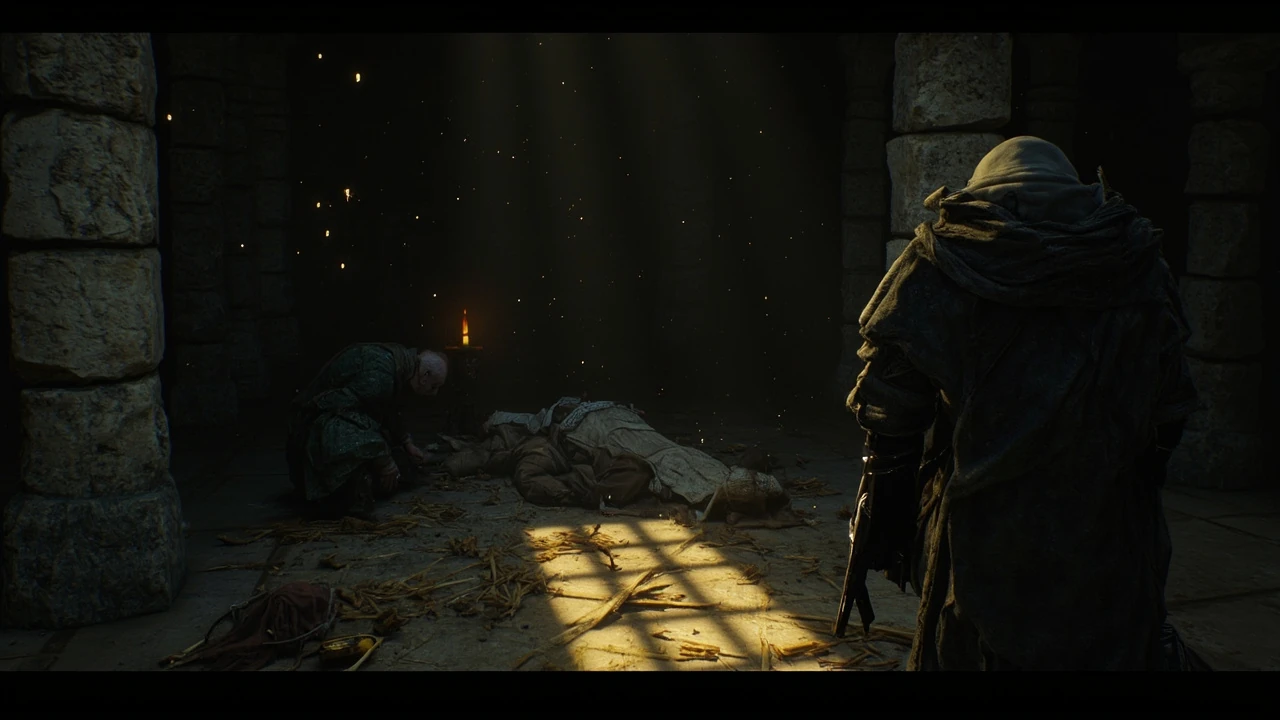
The first time most players meet White Mask Varré in Elden Ring, he is crouched over the body of another Tarnished near the opening Site of Grace. The scene reads like flavour at first, but it is actually the first node of one of the most missable quest chains in the game. Miss a single trigger and an entire late-game area, a unique armament, and a stack of cooperative-game items quietly disappear from the save file. This walkthrough covers the full varre questline from that opening encounter through to the final choice at the bottom of Mohgwyn Palace, and explains why each step exists the way it does so you can adapt when you take a different route through the Lands Between.
The goal here is not to make the chain feel scripted. Varré’s quest is unusually sensitive to order of operations: he hands out items only after certain world flags are set, he rejects you at specific moments if you have already done something he considers rude, and his final reward depends on a late-game choice that the game does not warn you about. Treat the steps below as a decision tree you can follow, rather than a linear to-do list, and you will not lose the chain on a second or third character.
What the varre questline actually is and what it unlocks
The varre questline is an optional NPC chain in Elden Ring that runs in parallel with the main story rather than blocking it. It is built around the writerly idea that Varré serves the Two Fingers and the Greater Will in public, but in private he follows a different allegiance. Mechanically, the chain does three things:
- It opens an alternative fast-travel path into a late-game legacy dungeon, Mohgwyn Palace, without requiring you to fight through the whole Consecrated Snowfield or the Siofra River depth chain.
- It grants access to a unique armament, Varre’s Bouquet, which is a thematic reward that only the chain provides.
- It allows the player to opt into the invasions used to progress the Lord of Blood’s questline, with consequences for the game’s endings.
Beyond those mechanical payoffs, the chain is also one of the most efficient tutorial cases in Elden Ring for how FromSoftware quest flags actually work. Once you have seen the varre questline behave predictably, you can read the rest of the game’s NPC behaviour with much more confidence, including chains like Ranni’s, Fia’s, and Nepheli’s that use the same trigger system under different names.
Meeting White Mask Varré for the first time
You encounter Varré in the opening chapel area of Limgrave, before you have even left the First Step. The first step of the varre questline begins when you approach the masked figure kneeling over a corpse. He introduces himself as a servant of the Two Fingers and asks how you arrived in the Lands Between. You can answer however you like; his dialogue branches, but the next flag he gives you is the same regardless of which answer you pick.
He hands you an item that looks like a finger but is clearly not: the Festering Bloody Finger. The item description explains that it is used to invade other players’ worlds. Mechanically, the real purpose is to teach you the invasion menu before the chain needs it later, and to set a soft flag on your save that Varré checks the next time you talk to him. Before you leave the chapel, talk to him again. He will offer a second item only after you have rested at a Site of Grace. This is the chain’s first order-of-operations check, and it is worth pausing on because the same check shows up in almost every other optional chain in the game.
Reading the first order-of-operations check
The reason Varré refuses the next item until you have rested is that the chain uses the rest event as a soft world flag. FromSoftware builds many NPC chains on top of rest events because they are simple, save-safe, and do not require the NPC to follow you around. As a designer, you can think of the rest as a commit point. The game assumes that anything you did before resting was preparation and anything you do after resting is your next decision. Once you understand that pattern, every other optional chain in the game becomes easier to read, including the Volcano Manor contract chain and Sellen’s primeval sorcerer hunt.
After you have rested once, return to Varré. He will offer you the second key item, a Furlcalling Finger Remedy, and he will mark the Rose Church location on your map. The Furlcalling Finger Remedy is also a real crafting reagent, which is one of the small design touches that makes the chain feel integrated with the rest of the game rather than bolted on.
Visiting the Rose Church and choosing your first invasion
The Rose Church is south of the Lake-Facing Cliffs Site of Grace, in the eastern part of Limgrave, on a low hill that overlooks the lake. When you approach, Varré is there, kneeling beside another dead body. He is happier to see you than he was at the chapel and explains that the church is a concordat of sorts, a place where he can perform a small rite. The first real choice of the varre questline is what to do with the Festering Bloody Finger you were handed earlier.
You have two paths from here:
- Use the Festering Bloody Finger to invade another player’s world and defeat the host. You do not need to win the match; the chain progresses as long as you have used the item and returned to Varré with the resulting message.
- Skip the invasion. You can give Varré a “dried finger” instead, but he makes clear that he is disappointed and that the rest of the chain will change shape, including which items he hands out later.
For most players, the cleanest path is to summon a friend as a co-op phantom, ask them to invade you with a Festering Bloody Finger, and then defeat them. This is faster than waiting for matchmaking and does not affect your save. It also doubles as a useful test of your early-game build, since your friend will use a level-appropriate weapon and a small healing vial, which tells you whether your damage output is in the right range for the area.
What changes if you do not invade
If you hand Varré a dried finger without completing an invasion, the chain still progresses, but the tone shifts. He no longer treats you as a fully committed member of his order. The early rewards are smaller, and the late-game cooperation items he gives you are different. Mechanically, this is the same pattern as a soft fail-state in any quest flag system: the designer keeps the player moving forward but changes the rewards so the choice still has weight, and the player can always reload an earlier save if they want the other branch.
From a designer’s point of view, the dry-finger branch is a useful reminder that NPC chains can carry a “morality” without ever showing a morality meter. The game simply watches which items you handed in and which dialogue you heard, then chooses the next scene from that data. The same trick is used in Ranni’s chain when you choose between Blaidd and Iji, and in Nepheli’s chain when you choose whether to forgive Gideon or not.
Returning to the chapel and unlocking the second item
After the invasion, rest at a Site of Grace and speak to Varré again. He will thank you and hand you the Lord of Blood’s Favor, a key item that opens the late-game branch of the varre questline. The item looks like a finger wrapped in a cloth; in the lore, it is a token of fealty to the Lord of Blood, Mohg. Mechanically, it is the second commit point in the chain, and the game uses it the same way it used the first rest event, as a flag that tells later scripts the player is committed to this branch.
You do not need to use the Lord of Blood’s Favor yet. In fact, you should not. The item only resolves in Mohgwyn Palace, and you cannot enter that area until later. The chain sits patiently in your inventory for as long as you want, including across long stretches of optional content like the entire Mountaintops of the Giants run, without any risk of timing out or expiring.
How to reach Mohgwyn Palace without the Consecrated Snowfield
The varre questline contains one of the most efficient routing shortcuts in Elden Ring: an early portal into Mohgwyn Palace. To use it, go back to the Rose Church, where Varré is still kneeling. He now offers a different kind of rite. If you give him the Lord of Blood’s Favor wrapped in the specific gesture he asks for, the ground cracks open beneath you and you fall into a hidden boss arena. You are now in Mohgwyn Palace, and the standard entrance to the area is no longer required.
This is the cleanest answer to “how do I get to Mohgwyn Palace fast” and the real reason the varre questline matters for players who want to optimize their route. The traditional path is to:
- Reach the Consecrated Snowfield by finding both halves of the Haligtree Secret Medallion, which is itself a chain of pickups and side dungeons.
- Defeat the hidden boss at the end of the Consecrated Snowfield, which is a tougher fight than the surrounding enemies suggest.
- Walk into Mohgwyn Palace through the main entrance and clear the blood lake on the way to the Dynasty Mausoleum.
That path is long, puzzle-gated, and depends on items many players have already used. The varre questline lets you skip it. From a GameDev angle, this is an excellent case study in alternate routing. The legacy dungeon is the same in both paths, but the difficulty curve and the resource spend are completely different. The chain offers the slow, lore-rich path and the fast, mechanical path, and lets the player choose without punishing either decision.
What to expect inside Mohgwyn Palace
Mohgwyn Palace is a short but extremely tough area. Expect a blood-soaked lake filled with rune-absorbing crows, a few illusory walls, a palace structure that opens out into a much larger boss arena, and a single major boss that gates two of the game’s endings. The area is designed to be approached after the Capital is mostly cleared, so most players should treat the varre questline portal as a fast travel option, not as an excuse to under-level. The recommended approach is to:
- Use the varre questline portal once, look around, and leave through the Dynasty Mausoleum teleporter so the Site of Grace is unlocked for later.
- Complete the rest of the Capital and Mountaintops of the Giants at the level the game expects, including the major boss fights in each area.
- Return to Mohgwyn Palace for the boss when you are ready to commit to a build, especially if you are going for the Lord of Blood’s ending.
One practical note: the crows in the lake deal percentage-based damage and can delete a run if you ride Torrent into the middle of them. Dismount, walk the edges, and clear them with ranged attacks or a single charged heavy before you cross.
The five rewards the varre questline actually gives you
Across its full length, the varre questline gives you five practical rewards. Knowing them up front makes it much easier to decide how much time to invest in each step, especially on a second character where you already know the route and only care about the unlock.
| Reward | When you get it | What it does |
|---|---|---|
| Furlcalling Finger Remedy | After first rest, return to Varré | Reveals co-op summon signs and can be crafted; mostly a tutorial reward |
| Varre’s Bouquet | After completing the Rose Church invasion | Unique striking weapon that scales with Arcane and procs bleed |
| Lord of Blood’s Favor | After invasion plus second rest | Key item used to open the Mohgwyn Palace portal at the Rose Church |
| Mohgwyn Palace access | After using Lord of Blood’s Favor at the Rose Church | Fast-track into the late-game legacy dungeon without the medallion |
| Six Bloody Finger items | From Varré at the end of the chain | Boosts invasion and cooperative play, lore-locked to the Lord of Blood |
Each reward is gated by a different kind of event, which is why missing one step blocks the rest. The Furlcalling Finger Remedy is a rest-gated item, the Bouquet is a combat-gated item, the Lord of Blood’s Favor is a story-gated item, and the portal is a location-gated item. Designing four different kinds of gates inside one short chain is part of what makes this questline feel mechanical rather than narrative, and it is the same reason the chain is so easy to document step by step.
Why the varre questline is so easy to break
Almost every “I missed Varré” forum thread in Elden Ring comes down to the same handful of trigger failures. The varre questline is unusually sensitive to world flags, order of operations, and accidental hostility. The five most common ways to break the chain are:
- Resting at the wrong Site of Grace in the chapel. Some players rest at the very Site of Grace next to Varré before talking to him. The chain still works, but you have to talk to him again afterward to pick up where you left off.
- Attacking Varré. He is a passive NPC and will not aggro, but if you hit him once, he dies and the entire chain is gone for that playthrough, with no resurrection option in New Game Plus either.
- Triggering the Volcano Manor questline before talking to Varré again at the Rose Church. The two chains share some world flags and the game picks whichever one you committed to first, which can soft-lock Varré’s later dialogue if you have already accepted a Manor contract.
- Completing the entire Mountaintops of the Giants before using the Lord of Blood’s Favor. The portal still works, but the boss becomes very hard at that point because your rune level is much higher than the area expects and the boss’s scaling has not caught up.
- Killing the NPC at the end of the chain before looting the final reward. This is rare but it does happen, especially in cooperative play where a host’s phantom can aggro Varré on accident; make sure you pick up the items from his body before the area despawns.
Each of those failures is a different kind of design problem, and each is a useful case study for developers working on similar quest systems. The first is a state-machine bug, the second is an aggression-radius issue, the third is a flag conflict between two chains, the fourth is a difficulty-scaling issue, and the fifth is a corpse-loot race condition. Solving any one of them in your own game is a useful exercise.
Mapping the varre questline to the rest of Elden Ring’s NPC chains
If you want to know where the varre questline sits in the broader game, the clearest way is to compare it to the other major NPC chains on the same axis: when they start, what gates them, and what they unlock. The table below uses the same columns the design notes above use, so you can see the pattern across chains at a glance.
| Chain | First trigger | Late-game gate | Major unlock |
|---|---|---|---|
| Varre questline | First chapel, Limgrave | Rose Church plus Lord of Blood’s Favor | Mohgwyn Palace portal, Varre’s Bouquet |
| Ranni questline | Meet Ranni at Liurnia tower | Three great carvings across the map | Age of the Stars ending, Dark Moon Greatsword |
| Fia questline | Talk to Fia at Roundtable Hold | Deeproot Depths access | Mending Rune of the Death-Prince, Cursemark of Death |
| Volcano Manor | Receive letter at Roundtable Hold | First assassination contract | Rykard’s armor set, Magma Shot, Devourer’s Scepter |
| Sellen questline | Find Sellen in Limgrave | Find primeval sorcerer Azur or Lusat | Azur’s and Lusat’s sorceries, unique staff |
| Nepheli questline | Help Nepheli at Stormveil | Choose her fate at the end | Unique armament, optional Summon Water preset |
The varre questline is the shortest of these chains and the one that gates the largest area, which is why many guides treat it as a must-do while still calling it optional. In a hub-and-spoke content model, it is a spoke that reaches the same end node (the Lord of Blood) as a different spoke (Ranni, in a different sense) but uses a much shorter and more combat-focused path, and it does not require any of the great-carving hunts that the longer chains demand.
Reading the varre questline as a designer
From a development perspective, the varre questline is a compact example of four patterns that come up again and again in open-world quest design. Walking through them in order is a useful exercise for any developer or technical artist who wants to see how FromSoftware ties a short chain to a much larger game, and how the same patterns show up in chains like Sellen’s and the Volcano Manor contract list.
Soft gating through item handoffs
The chain uses the Furlcalling Finger Remedy, the Festering Bloody Finger, the Lord of Blood’s Favor, and the final six Bloody Finger items as soft gates. None of these items block any other quest by themselves. The chain progresses only when the player chooses to hand them over. This is much more flexible than a hard flag because the same item can also be used for other things. The Furlcalling Finger Remedy is a useful crafting reagent even if you ignore the chain entirely, and the Festering Bloody Finger is a real multiplayer item that exists outside the chain’s logic.
The advantage of soft gating is that the player can experiment without losing progress. The disadvantage is that the designer cannot force a particular narrative moment, because the player can simply not hand the item over. Elden Ring solves this by giving the chain a default branch that still resolves in a small reward, so the chain never feels broken even if the player picks the “wrong” option on a first run.
Order-of-operations puzzles as content
Every step in the varre questline has a hidden prerequisite. To get the Bouquet you must invade, to get the Lord of Blood’s Favor you must rest, to get into Mohgwyn Palace you must use the Favor at the Rose Church. None of these prerequisites is shown in the UI. The player is expected to discover them by talking to Varré, reading item descriptions, and watching what happens when they try to interact with him. This is the same pattern FromSoftware has used since the original Dark Souls, and it is one of the reasons the studio’s NPC chains are so discussable: the player has to do real investigative work rather than follow a quest log.
For a designer, the lesson is that hidden prereqs are a content budget. You do not need to write a long NPC script if the items themselves are interesting and the prereqs are readable. The varre questline runs on about a dozen dialogue lines, but it has the content weight of a much longer chain because every step has a decision attached, and each decision feeds back into the next step in a way the player can feel.
Parallelism with the main story
The varre questline is fully parallel to the main story. You can complete it in the first hour or in the fortieth hour and the result is the same. The chain does not affect any other NPC’s behavior, except for the Lord of Blood’s boss, and the only branching happens at the very end. This is the design choice that makes Elden Ring’s optional content feel live instead of “side quest”: the chain shares world state with the main story but does not change it, and the player’s main-story progress is never gated by an optional chain’s completion.
For a developer, this is the cleanest way to design optional content. You do not need to branch the main story. You just define a new world flag, set it from the chain, and let the main story read that flag when it reaches the relevant node. The cost is that you have to be careful about flag conflicts, which is the same issue that bites the Volcano Manor and Varré overlap described above.
Reward shape that fits the chain length
The varre questline gives you five rewards in total, but the most valuable one is the Mohgwyn Palace portal. From a player’s point of view, the chain is worth doing for that one reward even if you ignore every other item. From a designer’s point of view, this is the right shape. A short, three-step chain that gates a long dungeon is a high-value trade for the player and a low-cost one for the developer, because the dungeon already exists. The chain is essentially a key, not new content, and that is the right way to think about optional routing in a large open world.
Where the varre questline ends and what to do next
The chain ends at the very bottom of Mohgwyn Palace. After the boss, you can return to the Dynasty Mausoleum teleporter, rest at the new Site of Grace, and decide what to do with the Lord of Blood’s body. The final choice of the chain is also the final choice of one of the game’s endings. If you are going for the Lord of Blood’s ending, the varre questline is the only way to make sure you have the option at all. If you are going for any other ending, the chain still gives you the portal and the Bouquet, but the final step becomes a dead end and Varré no longer appears in the chapel.
This is the cleanest moment to summarize the whole varre questline in one line: it is a four-step chain that runs from Limgrave to Mohgwyn Palace, gates the Lord of Blood’s ending, and gives you a striking weapon along the way. The only way to fail it is to miss one of the soft gates, and now that you know what those gates are, the chain is short, mechanical, and hard to lose even on a blind first run.
Internal resources for designers working on similar chains
For developers who want to dig deeper into the kind of soft-flag system the varre questline uses, the studio’s broader set of design notes covers similar trigger patterns in other open-world RPGs, including how hub-and-spoke quest models interact with shared world state and how to keep optional chains readable without exposing every flag in the UI.
Frequently asked questions
Where do I start the varre questline?
You start the varre questline in the opening chapel area of Limgrave, before you leave the First Step. White Mask Varré is kneeling over a corpse next to the Site of Grace. Talk to him, accept the Festering Bloody Finger, rest at any Site of Grace, and talk to him again. That sequence is the entire opener of the chain and sets the soft flag that the rest of the questline reads.
What happens if I attack Varré?
If you attack Varré, he dies and the entire varre questline becomes unavailable for the rest of the playthrough. There is no resurrection, no “I’m sorry” option, and no revival quest. The same rule applies to most other friendly NPCs in the game. If you are not sure whether an NPC is hostile, watch their posture; passive NPCs will not flinch at you until you actually swing, and even then they take a single hit before aggroing.
Do I need to invade another player to finish the varre questline?
You need to use the Festering Bloody Finger at least once and have it succeed, or hand Varré the right replacement item, before he will give you the Bouquet. The simplest way to do this is to ask a friend to invade you with their own Festering Bloody Finger and let you defeat them. This is also the fastest, since matchmaking can take a long time in the early game and a co-op partner is usually online when you are.
Can I use the Lord of Blood’s Favor too early?
You can use the Lord of Blood’s Favor as soon as you have it, but you should not. The item opens a portal into Mohgwyn Palace, which is a late-game area. Going in too early will leave you under-leveled and unable to deal with the boss. Treat the Favor as a save file for later, then come back to the Rose Church when you are ready to commit to the Lord of Blood’s questline and have a build that can survive the area’s percentage-based damage.
Is the varre questline required for any ending?
The varre questline is required for the Lord of Blood’s ending. Without the chain, you cannot reach the final act of the Lord of Blood’s questline in time, and the corresponding ending option is not available. For all other endings, the chain is optional but still valuable for the Bouquet and the Mohgwyn Palace portal, and it does not lock you out of any other ending if you ignore the final choice.
What is Varre’s Bouquet used for?
Varre’s Bouquet is a unique striking weapon that scales primarily with Arcane. It is a thematic reward for the chain rather than a top-tier build weapon, but it works well on Arcane-focused bleed builds, and it is one of the few striking weapons in the game with a built-in blood loss proc. It is also a popular roleplay weapon for players who like the White Mask aesthetic, and it pairs naturally with the White Mask headpiece that drops elsewhere in the game.
Can I complete the varre questline after finishing the main story?
You can use the Lord of Blood’s Favor to enter Mohgwyn Palace and finish the chain after the main story is complete, but the final choice will be locked into the Lord of Blood’s ending. If you want a different ending, you must start a new playthrough or load an earlier save. The chain itself is not tied to a particular story milestone, but the final choice is, and the game’s ending sequence reads the flag set by that final step.
What if I started Ranni’s questline first?
Ranni’s questline and the varre questline are independent. You can do both in the same playthrough without any conflict, as long as you trigger the Rose Church before the Volcano Manor contract chain locks the area. The two chains reach different parts of the late-game map and do not share any items, so the order in which you complete them does not matter for the rewards, and you can alternate between them as you find the relevant triggers.
Does the varre questline work in co-op?
Most steps in the varre questline work in co-op, but the invasion step is the exception. The Festering Bloody Finger only works in solo play, because the game treats co-op hosts as protected from invasion. If you are running co-op, ask your partner to leave the session, complete the invasion step, and then rejoin. The rest of the chain, including the Lord of Blood’s Favor and the Rose Church portal, works the same way in co-op as it does solo, and the final NPC loot is shared with your partner as long as they are in the session when the boss is defeated.
Why does the varre questline give so many invasion items?
At the end of the varre questline, Varré hands you six Bloody Finger items. They are the chain’s signature reward and a thematic signoff: the chain starts with one Bloody Finger and ends with a stack of them. Mechanically, they are also a useful resource for players who enjoy the invasion system, and they double as a way to keep the Lord of Blood’s player population active even after the boss is defeated, which matters more on PC than on console because the matchmaking pools are different.





Leave a Reply