3D Character Design Services for Modern Entertainment
Creating memorable digital entities takes more than raw technical skill. It requires a deep understanding of storytelling, human anatomy, and real-time rendering constraints. When studios look for professional assistance, choosing the right digital art partner changes everything.
Great models capture attention instantly. They speak to viewers before uttering a single line of dialogue. Whether you are building a vast game universe or an animated feature film, working with experienced artists ensures your vision translates smoothly into three dimensions.
The demand for high-quality assets continues to climb across every creative sector. Virtual reality, mobile gaming, visual effects, and digital collectibles all depend on pristine asset creation. Navigating this landscape means understanding how artists turn rough concept sketches into fully realized assets.
How Professional 3D Character Design Services Transform Your Vision
Bringing a concept into three-dimensional space is an intricate journey. It starts long before anyone touches digital sculpting software. The process begins with active listening, clear references, and careful anatomical planning.
Artists break down character personalities into physical forms. A rugged warrior needs heavy proportions, worn leather textures, and subtle scarring. A futuristic android requires clean geometric lines, metallic reflections, and functional mechanical joints. Professional studios know how to embed these narrative details right into the geometry.
And that attention to detail saves immense time down the line. When dynamic mesh structures are built correctly from day one, animators face fewer technical headaches. Riggers can attach skeletons without battling weird mesh stretching. Render engines process clean geometry faster, keeping project builds efficient.
Here is what makes custom modeling solutions indispensable for modern production teams:
- Custom anatomical proportions customized for specific engine requirements
- Clean geometry designed specifically to avoid stretching during complex animations
- High-detail sculpting that preserves tiny surface elements like skin pores and cloth weaves
- Optimized texture maps tailored for physically based rendering pipelines
- Production-ready files delivered in formats compatible with major industry engines
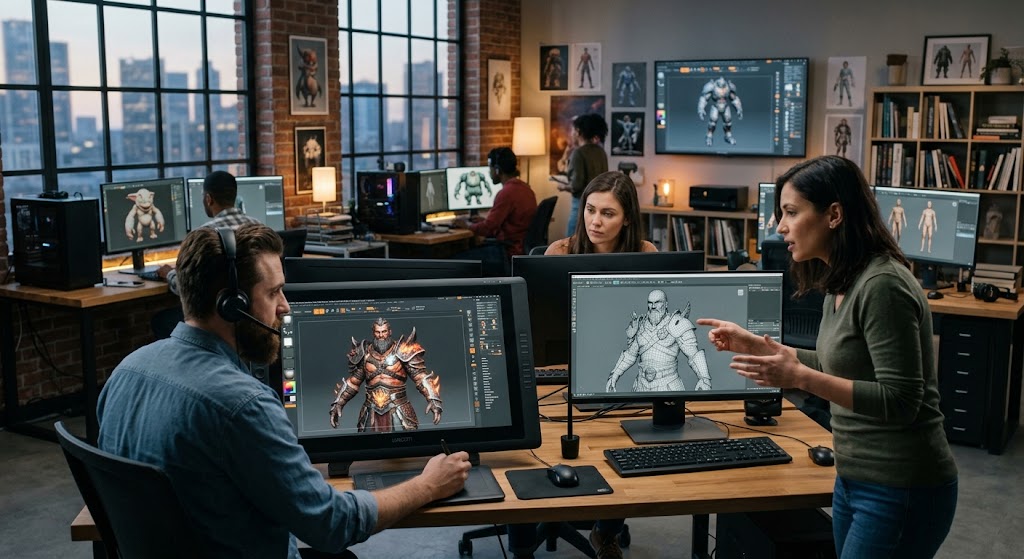
Working with specialized teams also provides flexibility. Internal development teams often face tight deadlines and limited bandwidth. Outsourcing specialized art production fills critical skill gaps without adding permanent overhead costs. You get instant access to senior sculpting talent, texture artists, and technical directors.
Look at how different entertainment sectors utilize these specialized workflows: Video Games (AAA)Hero Characters & NPCsPBR Textures, Strict Polycount Limits, LOD SetupAnimated MoviesExpressive High-Poly CastComplex Facial Rigs, Micro-Detail SculptingMobile GamingStylized AvatarsLow Polycount, Hand-Painted Textures, Atlas MapsVFX & CommercialsPhotorealistic DoublesSubsurface Scattering, Grooming/Hair Systems
| Industry Sector | Primary Model Focus | Key Technical Requirements |
|---|
Quality digital asset generation is not just about making things look pretty. It is about functionality. A hero model might look stunning in a frozen pose, but if the mesh breaks during an overhead sword slash, the asset fails. Expert creators build assets that hold up under extreme movement and lighting conditions.
Choosing the Best 3D Character Design Services for Your Pipeline
Not all art studios work the same way. Finding the right partner requires assessing their technical capabilities, communication style, and past portfolio pieces. You need a team that understands your specific game engine or rendering setup.
First, evaluate their pipeline adaptability. Does the studio work seamlessly with Unreal Engine 5 or Unity? Are they comfortable using industry standard packages like ZBrush, Maya, Blender, and Substance 3D Painter? A good agency integrates directly into your existing project management tools, using platforms like ShotGrid or Jira to track revision history.
Communication matters just as much as artistic capability. You want art directors who ask thoughtful questions early in the development cycle. They should probe into character backstories, movement expectations, and target platform constraints before starting any sculpting work.
Consider these core stages when evaluating potential production partnerships:
- Concept Phase: Refining initial 2D silhouettes and approving key color schemes
- High-Poly Sculpting: Crafting organic shapes and intricate surface details
- Retopology: Converting dense sculpts into clean, animation-ready low-poly meshes
- UV Unwrapping & Texturing: Mapping 2D textures onto 3D surfaces with physical accuracy
- Rigging & Testing: Adding bone structures and verifying mesh deformation under stress
Budgeting for custom digital assets can feel tricky if you are unfamiliar with art production metrics. Cost depends on model complexity, visual style, technical requirements, and total asset count. Real-time game assets with strict performance budgets require different labor hours than cinema-ready photorealistic assets.
Here is a general breakdown of how production complexity impacts development timelines and asset scope: Stylized / Low-PolySimple shapes, bold colors, minimal surface noise3 to 5 Working DaysMid-Tier Game AssetPBR texturing, moderate polycount, clean clothing folds7 to 12 Working DaysAAA Hero CharacterPhotorealistic hair/skin, intricate armor, complex layers15 to 25 Working DaysCinematic / VFX QualityExtreme density, strand-based hair, micro-displacement25+ Working Days
| Complexity Tier | Visual Style Characteristics | Estimated Production Time |
|---|
This timeline reflects careful iteration cycles. Regular review checkpoints keep projects on schedule and prevent costly late-stage revisions. By reviewing grey-box blocks and high-poly sculpts early, studios lock in proportions before texturing begins.
So, what should you prepare before contacting a production partner? Having a clear project brief streamlines the onboarding process significantly. Gather references, define technical constraints, and set realistic milestones from the very start.
Make sure your brief includes these key elements:
- Target platform specifications (Mobile, Console, PC, VR)
- Engine constraints including maximum triangle count and texture sizes
- Visual reference boards showing desired art style and lighting mood
- Animation requirements, such as facial blendshapes or full skeletal rigs
- Clear asset delivery deadlines matched with project milestones
Investing time in a thorough brief pays off immediately. It allows artistic teams to give accurate timeline estimates and accurate pricing quotes right away. Clear expectations lead to smooth collaboration and stunning final assets.
Frequently Asked Questions
What Are 3D Character Design Services?
3d character design services encompass the professional process of creating three-dimensional digital models for video games, films, commercials, and virtual environments. This process involves concept translation, 3D sculpting, retopology, UV mapping, texturing, and optional rigging. Specialized studios build these assets to fit exact technical specifications for real-time engines or pre-rendered visual media.
How Much Do 3D Character Design Services Cost?
The cost of hiring 3d character design services varies widely based on style, complexity, and technical requirements. Simple stylized or low-poly characters generally range between $500 and $1,500. Highly detailed AAA game assets or cinematic photorealistic models can cost anywhere from $2,500 to over $10,000 per asset, reflecting the intensive labor and specialized artistic expertise involved.
How Long Does It Take To Design A 3D Character?
Designing a complete 3D character typically takes between one and four weeks. A basic stylized asset may take 3 to 5 days, while a fully rigged, photorealistic hero asset for a AAA video game or movie often requires 3 to 4 weeks of dedicated sculpting, retopology, texturing, and testing iterations.
What Software Do Professional 3D Artists Use?
Professional digital artists rely on industry-standard tools to build assets. ZBrush is the top choice for high-detail digital sculpting, while Maya, Blender, and 3ds Max handle retopology, modeling, and rigging. For texturing, Substance 3D Painter and Designer lead the industry. Rendering and real-time testing are frequently performed inside Unreal Engine or Unity.
What Is The Difference Between High-Poly And Low-Poly Models?
High-poly models consist of millions of polygons, capturing fine details like skin pores, fabric weaves, and subtle wrinkles; they are used primarily for pre-rendered cinematics or baking detail maps. Low-poly models use optimized geometry with far fewer polygons, allowing real-time game engines to render them smoothly at high framerates while using baked maps to display high-poly details.
Can You Rig And Animate The 3D Characters You Create?
Yes, most full-service studios provide rigging and animation alongside character modeling. Rigging creates the digital skeleton and control handles that allow animators to move the character naturally. Studios can deliver custom skeletal structures, facial blendshapes for lip-syncing, and idle or action animation cycles tailored to your engine specifications.
What Files Do Clients Receive Upon Project Completion?
Upon completion, clients receive fully packaged production files. These typically include source files (.ZPR, .MA, .BLEND), standard 3D export formats (.FBX, .OBJ), and high-resolution PBR texture maps (Albedo, Normal, Roughness, Metallic, Ambient Occlusion) exported in PNG or TGA formats. Engine-ready files configured for Unreal Engine or Unity are also provided upon request.
Choosing professional 3d character design services elevates the visual impact of your project while keeping your internal production pipeline running smoothly. By collaborating with skilled digital sculptors and technical artists, you turn creative concepts into fully realized, interactive assets ready for immediate engine integration. Take time to build a solid brief, select a studio aligned with your aesthetic goals, and enjoy watching your digital characters come to life.
Leave a Reply